Archives
- 2026-07
- 2026-06
- 2026-05
- 2026-04
- 2026-03
- 2026-02
- 2026-01
- 2025-12
- 2025-11
- 2025-10
- 2025-09
- 2025-04
- 2025-03
- 2025-02
- 2025-01
- 2024-12
- 2024-11
- 2024-10
- 2024-09
- 2024-08
- 2024-07
- 2024-06
- 2024-05
- 2024-04
- 2024-03
- 2024-02
- 2024-01
- 2023-12
- 2023-11
- 2023-10
- 2023-09
- 2023-08
- 2023-07
- 2023-06
- 2023-05
- 2023-04
- 2023-03
- 2023-02
- 2023-01
- 2022-12
- 2022-11
- 2022-10
- 2022-09
- 2022-08
- 2022-07
- 2022-06
- 2022-05
- 2022-04
- 2022-03
- 2022-02
- 2022-01
- 2021-12
- 2021-11
- 2021-10
- 2021-09
- 2021-08
- 2021-07
- 2021-06
- 2021-05
- 2021-04
- 2021-03
- 2021-02
- 2021-01
- 2020-12
- 2020-11
- 2020-10
- 2020-09
- 2020-08
- 2020-07
- 2020-06
- 2020-05
- 2020-04
- 2020-03
- 2020-02
- 2020-01
- 2019-12
- 2019-11
- 2019-10
- 2019-09
- 2019-08
- 2019-07
- 2018-07
-
More recent studies have correlated sPLA V with alternative
2020-04-30

More recent studies have correlated sPLA2-V with alternative macrophage activation (M2) in human and murine macrophages [149,150]. sPLA2-V expression was induced during both human and mouse interleukin-4–mediated activation of macrophages in vitro, and its absence impaired macrophage activation in v
-
SB505124 Enzyme mimics belong to a type of rising catalysts
2020-04-30
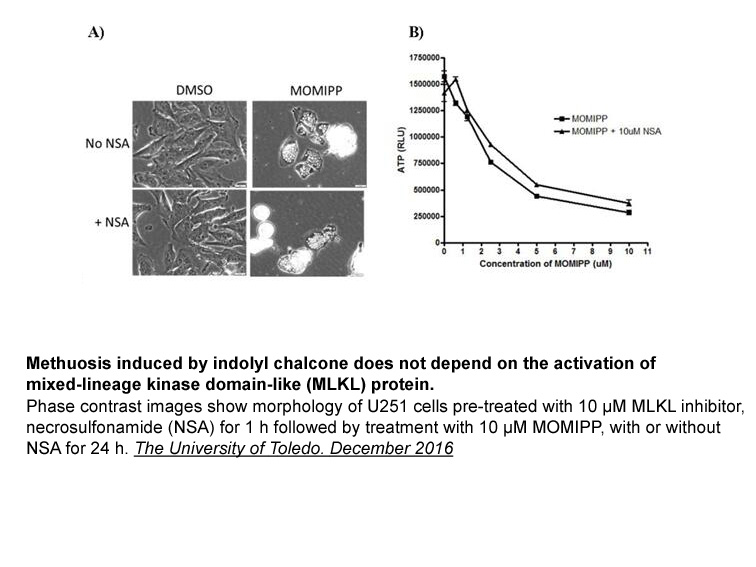
Enzyme mimics belong to a type of rising catalysts which show the similar function with their corresponding natural enzymes [20], [21], [22], [23], [24], [25], [26], [27], although their structures are different from natural enzymes. In the area of prodrug activation, the widely-used enzyme mimics a
-
TgTCEA from petals TgTCEA and TgTCEB
2020-04-30
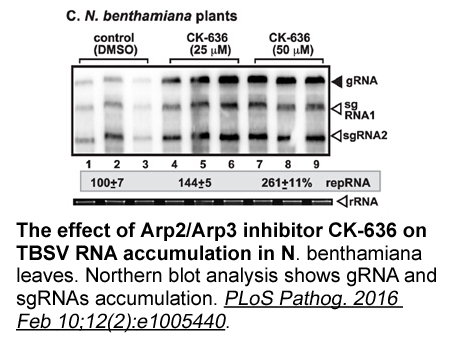
TgTCEA from petals (TgTCEA1) and TgTCEB from pollen grains (TgTCEB1) were used throughout the study. The recombinant enzymes were expressed in , and purified as the His-tag-free forms as described previously., Enzyme reactions were performed at 4 mM substrates under the same conditions as described
-
Support for Cloninger s personality theory comes also from
2020-04-30
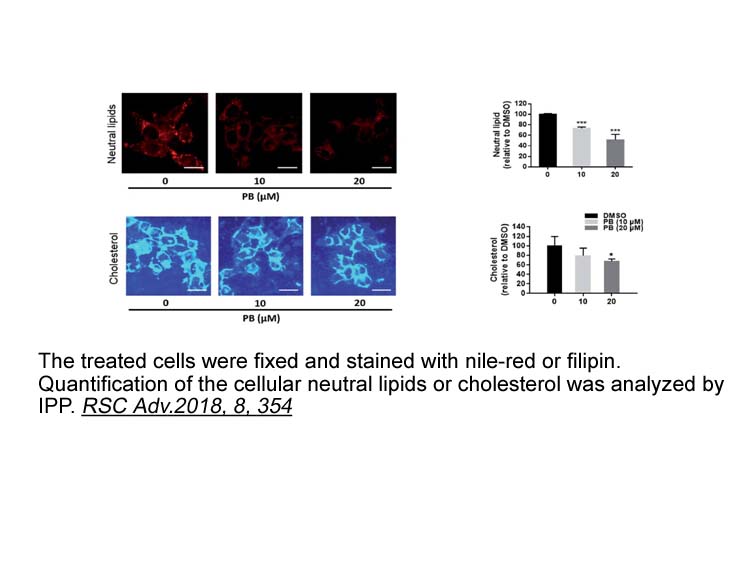
Support for Cloninger\'s personality theory comes also from molecular genetic studies. Given the high heritability of personality it is plausible that gene variants explain variance in RD. In Nilvadipine sale to endocrine studies, which relate hormone levels mostly in the periphery (blood, saliva,
-
br Conflicts of interest br Introduction G protein
2020-04-30

Conflicts of interest Introduction G protein-coupled receptors (GPCRs), form the largest human membrane protein family, with 800 members overall. Many druggable targets for treatment of common diseases involve GPCRs that mediate therapeutic effects of 34% of all marketed drugs (Hauser, Attwood
-
In children only the genotype
2020-04-30

In children, only the 6/7 genotype was associated with spina bifida, increasing the risk about 4 times relative to the DHFR 3/3 and 6/6 genotypes. However, the 95%CIs are broad and only few spina bifida patients have the DHFR 6/7 genotype. The effect of the 6/7 genotype on spina bifida risk is there
-
The molecular formula of was assigned as
2020-04-30
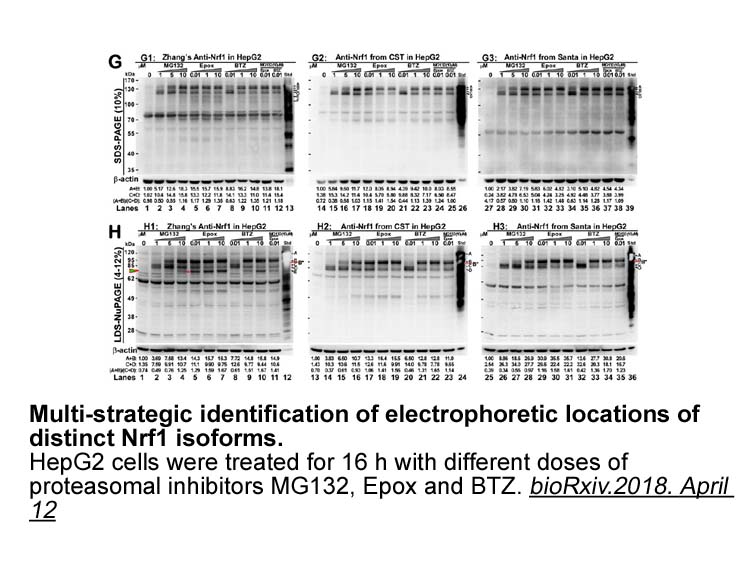
The molecular formula of 2 was assigned as C12H12N2O2 by the positive HRESIMS at m/z 217.0973 [M+H]+ (calcd for 217.0972), 13C NMR and DEPT spectra, having 8 degrees of unsaturation. The 1H NMR spectrum contains an ABX spin system comprised of resonances at δH 7.47 (d, J=1.9Hz, H-2′), 6.86 (d, J=8.3
-
We further verified the presence of CLIC
2020-04-29
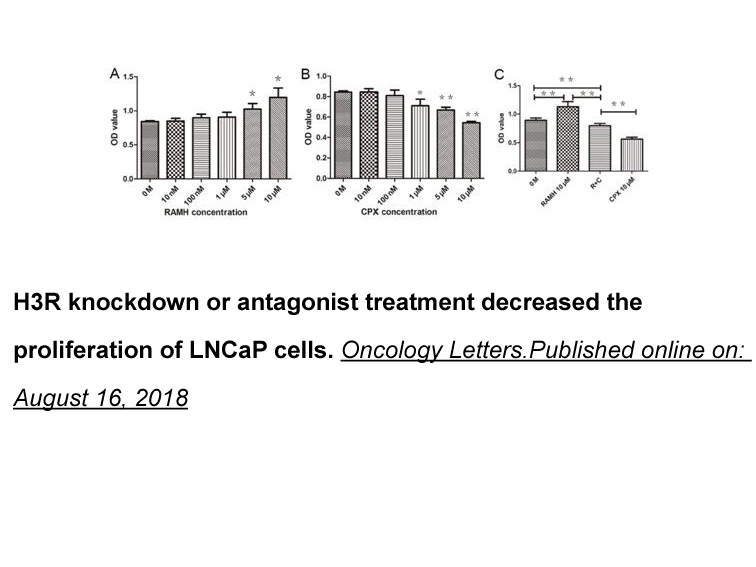
We further verified the presence of CLIC1, CLIC4 and CLIC5 in purified mitochondria following protocols described earlier (Singh et al., 2012). As shown in Fig. 4, CLIC4 and CLIC5 were present in the ultra-pure mitochondrial fraction (M3). All the three fractions obtained from 30% (v/v) Percoll grad
-
Based on the finding described above the
2020-04-29
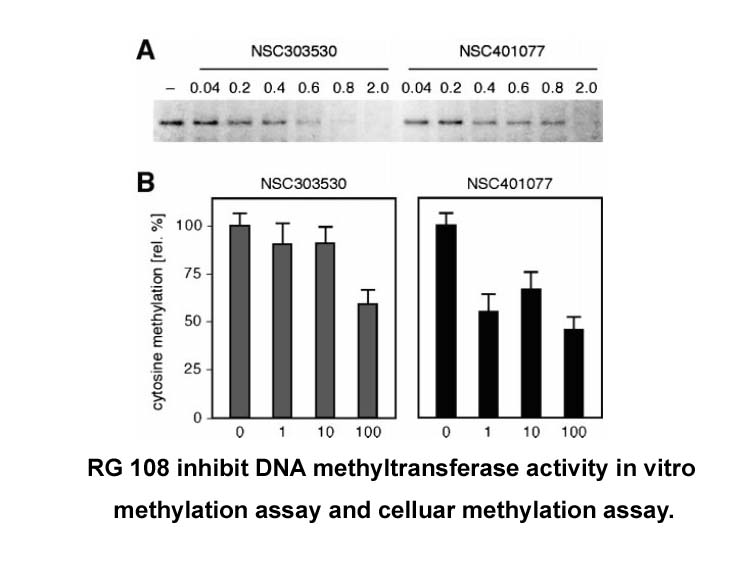
Based on the finding described above, the present study was designed to investigate the effects of specific CRF receptors, CRF1 and CRF2, in the BLA and CeA on the duration of TI in guinea pigs (Cavia porcellus). To this end, we evaluated whether administration of the CRF1 palmitic acid antagonist C
-
br Introduction Receptor tyrosine kinases RTKs are criticall
2020-04-29
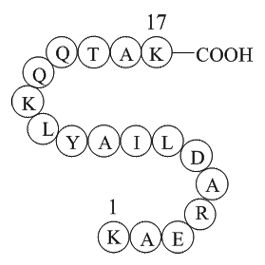
Introduction Receptor tyrosine kinases (RTKs) are critically involved in the development and progression of human cancers and are therefore useful targets for anti-cancer therapies [1]. The Eph receptors represent the largest subfamily of receptor protein kinases and interact with ligands called
-
br Experimental Procedure br Acknowledgment This
2020-04-29
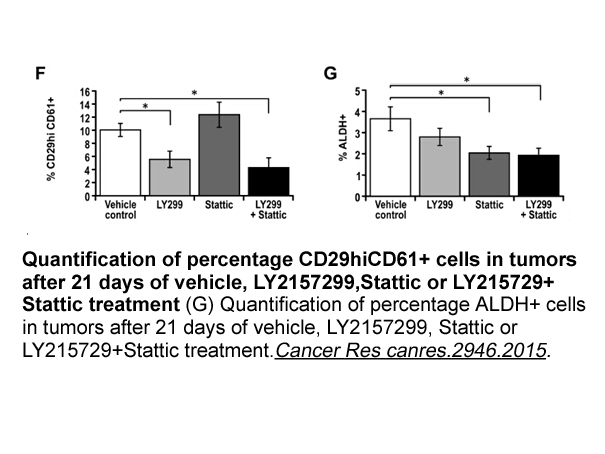
Experimental Procedure Acknowledgment This work was supported by Ministry of Education, Singapore (MoE Tier-2) grant (R-154-000-625-112) and R154-000-A72-114 (AcRF Tier 1 grant) respectively. We acknowledge the Advanced Photon Source Beamline 24-ID-C, Argonne National Laboratory, USA. D.N. is
-
It is generally thought that the nature of a memorial
2020-04-28
It is generally thought that the nature of a memorial and the meaning attributed to it d cycloserine by a tourist determines, at least in part, the behaviour that is socially appropriate (Mayo, 1988). Duncan (1995) argues however, that certain places are structured in such a way that they facilitat
-
Introduction Innate lymphoid cells ILCs are recently describ
2020-04-28
Introduction Innate lymphoid online job (ILCs) are recently described immune cells of lymphoid origin and include cytotoxic natural killer (NK) cells and interleukin-7 receptor alpha (also known as CD127)+ subsets, which, similar to T helper (Th) lymphocytes, can be distinguished on the basis of si
-
Here we discuss implications of several major
2020-04-28

Here, we discuss implications of several major families of RING-type E3 ubiquitin ligases (MDM, Cullin, GRAIL, TRAF, TRIM) as targets in inflammation and immunity, and provide insights into potential small molecule interventions to mediate the cellular responses (summarized in Table 1). We briefly c
-
E protein expressed in a plasmid encoding codon optimized
2020-04-28
E1 protein expressed in a plasmid encoding codon-optimized canine oral papillomavirus (COPV) led to therapeutic immunization of COPV-infected Beagle dogs [25], [26], which was better than that achieved with plasmids encoding E2 or E7 COPV. Moreover, E1 and E2 from cottontail rabbit papillomavirus (C
15664 records 899/1045 page Previous Next First page 上5页 896897898899900 下5页 Last page